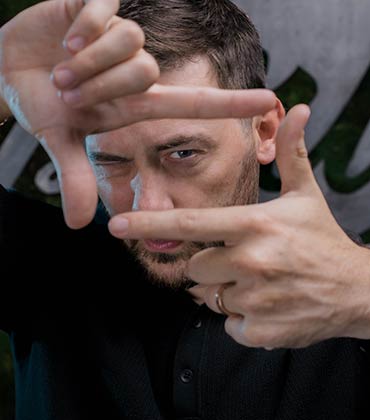
Bryce Richardson
Bryce Richardson is the Creative Director at Paperlyte, where he oversees production operations, workflow optimization and creative execution across motion graphics, post-production, documentaries, commercials and live broadcasts. Drawing on hands-on production experience, he focuses on building scalable processes, strengthening team alignment and helping organizations deliver consistent results as projects grow in complexity.
Precision behind the Process
Some stories are shaped long before the audience sees the finished work. At Paperlyte LLC, where motion graphics, post-production, documentaries, commercials and live broadcasts come together through a highly collaborative approach, I have learned that alignment is critical. When everyone, from the client to the operator, shares the same understanding, communication becomes clearer and execution becomes smoother. Over the years, that perspective continues to shape how our workflows evolve as projects become more complex and viewing habits continue to evolve.
My career began in production, which gave me an appreciation for the technical side of the business and the amount of coordination required behind the scenes. Working under pressure taught me lessons that still influence how I lead today. My focus gradually shifted from managing my own responsibilities to supporting broader outcomes across multiple teams and projects simultaneously.
Production has a way of presenting new challenges every day. Technical limitations, timelines, budgets and changing client priorities are all part of the process. I have learned that leadership often comes down to problem-solving and ensuring the right effort is applied where it can have the greatest impact. One lesson that has stayed with me throughout my journey is the importance of helping talented teams work toward a shared goal.
I have also come to believe that strong teams can succeed in almost any environment. Success does not come from process alone. Talented, driven people will always find ways to solve problems and create meaningful work. As projects and teams continue to grow, well-defined workflows become essential for maintaining scalability, efficiency and consistency. At the same time, staying competitive requires a willingness to embrace new ideas, technologies and ways of working in an ever-changing industry.
Building Workflows That Support Creativity
Production management begins with understanding what a project truly needs. Commercials, documentaries and live broadcasts all share certain fundamentals, but every project we work on has its own requirements. I have learned that effective production management is less about creating complex processes and more about building the right structure around a project. At the center of almost every successful production is a simple checklist.
Great work still comes from people working together toward a goal.
Whether we are confirming call sheets, troubleshooting technical issues, tracking approvals or managing deliverables, structure helps ensure that nothing gets missed. Communication becomes even more important as teams become larger. Making sure the right information reaches the right people at the right time allows everyone to stay focused on the work rather than chasing answers or reacting to issues that could have been avoided.
That visibility becomes especially important when managing multiple productions simultaneously. Every project comes with its own priorities, constraints and stakeholders, so there is rarely a single framework that fits every situation. Understanding the project itself is important, but understanding how each person involved views it can be just as valuable.
My decisions are shaped by technical requirements, staffing, timelines and budgets. Many of our processes are tailored to the needs of a specific production and have evolved in response to real production challenges, becoming more refined over time. That continuous refinement helps keep projects moving forward.
Workflow efficiency has also played an important role in the growth of our graphics and post-production work. I believe structure should provide clarity without creating unnecessary overhead. Too much reporting can reduce efficiency and pull people away from the work itself. Every client and every project is different, so finding the right balance requires constant evaluation.
Over the years, our graphics and post-production capabilities have expanded significantly. We are taking on larger projects from both an output and creative perspective. This growth has been supported by an ongoing process of trial and error, testing new tools and products to improve scalability without compromising quality. From the client side, trust often comes down to visibility. People appreciate understanding what is happening, what comes next and knowing that a project is moving in the right direction. Clear communication creates a better experience for everyone involved.
Evolving With Changing Audiences
One of the biggest changes I have seen is the way audiences consume content. Every project has a primary destination, but we also consider how viewers will experience it across different formats when the scope warrants it. Adapting content across formats should never come at the expense of the primary deliverable. The goal is to make sure the work remains effective wherever it is viewed.
Much of our approach comes from exploring ideas, observing how audiences engage with content and remaining adaptable. Consumers have more influence than ever before, which makes understanding and filtering feedback into the final product an important skill.
The same philosophy applies to workflows. Most of our systems have evolved alongside the increasing scope and complexity of the projects we take on. Many of those processes were created in response to real situations that required solutions.
Over time, those solutions became part of the workflow and continued to evolve as new challenges emerged. Today, I aim to simplify whenever possible and add steps only when they are necessary. The objective is to maintain visibility and organization while allowing people to move quickly and work efficiently.
Of course, systems and processes are only part of the equation. For anyone looking to lead in media production, my advice is to understand as much of the production process as possible. The more knowledge you have beyond your own role, the better prepared you are to solve problems and make decisions when challenges appear, and they certainly will.
Beyond that, as team members grow, give them opportunities to take ownership while continuing to provide guidance and visibility when needed. In my experience, empowering people to take responsibility is essential to building teams that can consistently deliver great work.
Technology, workflows and platforms will continue to change, but the fundamentals remain remarkably consistent. Looking back on my journey, one lesson stands above everything else: success is ultimately driven by people. Finding talented individuals, supporting their development and creating an environment where they can thrive has been one of the most valuable lessons of my career.


